LET’S PUT A STOP TO HUMAN TRAFFICKING.

STP is a mobile app for people in danger of trafficking. Share your live location with people you trust, get turn-by-turn directions to a safe place nearby, and ask for help from the community around you, without having to go through police.

Our Story

STP, Inc. was founded by Jaime Patton. The company holds a granted U.S. patent covering the thing that makes the app different: a person in danger can ask for help from the community around them without having to go through the police or other applicable authorities.
‍
That cuts both ways, and it is meant to. Someone who cannot safely call the police still has a way to reach help. And the people most likely to notice something wrong, like hotel staff, rideshare drivers, truckers, teachers and neighbors, have a way to act without reporting directly and risking retaliation.
‍
We are building the app now. The East Side of Atlanta is where we're starting, and we are looking for the local partners who make a safe place real.

Our App: Communication Reimagined

STP’s app is designed to redefine secure communication in an increasingly digital world. With a focus on privacy, simplicity, and efficiency, our app provides a seamless experience for individuals and organizations alike. It enables end-to-end encrypted messaging, ensuring that your conversations remain private and secure from unauthorized access. Whether you're sharing sensitive documents, conducting virtual meetings, or simply staying in touch with loved ones, our app guarantees the highest level of protection.

  • End-to-End Encryption
  • User-Friendly Interface
  • Available on iOS
    and Android
Download STP Today

Where We're Starting

STP starts on the East Side of Atlanta. It's our founder's own neighborhood, not a market picked off a map.
‍
That choice is the whole method. A safe place is only a safe place if a specific door opens, a specific person is behind it, and someone has agreed in advance what happens when a person walks in scared. That work is local, it happens one conversation at a time, and it does not scale ahead of itself.
‍
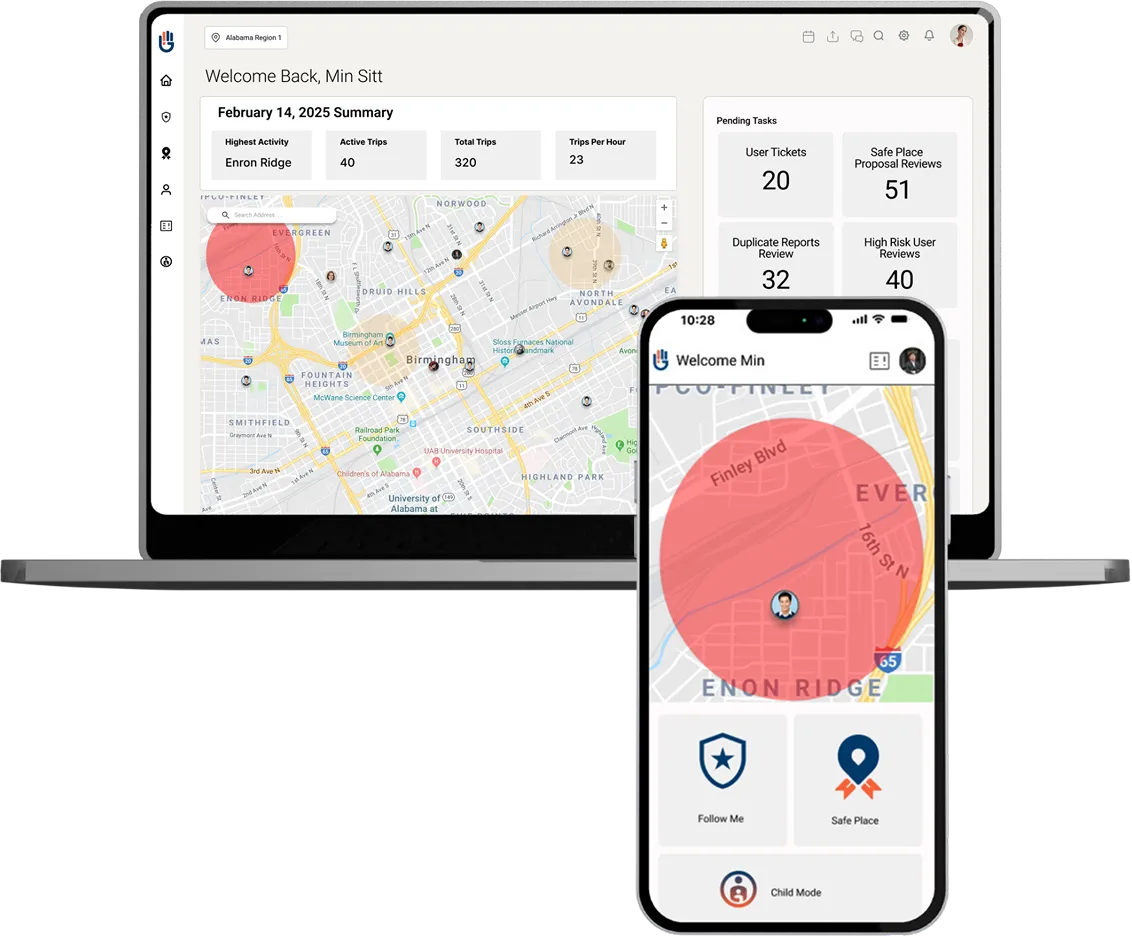
So here is exactly where things stand. STP is not live in Atlanta. We have no partner locations to announce, and we are not going to name any before they exist. The safe places on the screens above are examples: the categories a network gets built from, like a library, a church, a clinic, or a shop with a staffed counter. They are not real locations, and no business shown has agreed to anything.
‍
What is real is the part that comes first: finding the organizations, businesses and congregations already serving as the place people go when something is wrong on the East Side, and asking them to be that on the map too.

Become a Safe Space

If you run somewhere on the East Side where a person in trouble could walk in, start a conversation with us. Nothing gets signed on a first call. We would rather define what a Safe Space partner commits to alongside the people who would be first to do it than hand anyone a form.

Be Part Of The Network

STP works because of the people already on the block, the ones who would help if there were a safe way to. Join the waitlist and we'll tell you when the app is ready, and how to put your own location forward as a Safe Space for review.

Join the Waitlist

How It Works

Look at the STP mark: a right hand, four fingers up, thumb folded in. It's the signal a person makes when they can't say out loud that they need help. The app works the same way: a way to ask for help without announcing it.

*STP is not an emergency service and does not replace 911. If you are in immediate danger, call 911.

Ask for help without going through police

STP lets you send out a request for help that reaches other users near you, without having to go through the police or other applicable authorities. Help can come from the block you're standing on. If you want authorities brought in, that's your call.
‍
When STP's patent was filed, no mobile application did this: guide a person to a nearby safe location and let them request help directly from the community. That gap is what STP was built to close.
‍
The same screen lets you post an alert about suspicious activity in your area, or update your status so the people watching out for you know where things stand.

Follow Me

The app opens on two modes. Follow Me is the first, and it starts in one action, because the person who needs it may be standing next to someone they don't want to alert.
‍
Once it's running, your live location goes to the trusted contacts you've chosen, and to authorities if you include them. You can chat or call inside the session, so you're not switching apps to explain what's happening. When you're safe, you mark yourself safe and the session ends.

Find a safe place

Safe Space is the second mode. STP shows you the safe places near you and gives you turn-by-turn directions to the one you pick. It looks the same as navigating anywhere else, because that is what it should look like to anyone watching. When you arrive, confirmation goes to your emergency contacts. Nobody is left guessing whether you made it.

Community safe places

Safe places come from the people already on those streets. A member can put their own location forward: a library, a church, a clinic, a shop with a staffed counter. Every proposal is reviewed and approved by a local authority, with a defined boundary, before it appears on anyone's map. The network is built by the neighborhood and checked before anyone relies on it.

Who verifies users

Every user verifies their identity at sign-up. Onboarding runs on CLEAR's identity verification: a selfie and a government ID, checked before the account is active. That check is why a request for help can be trusted by people you have never met. It answers the first question anyone asks about an app like this: what stops the wrong person from using it.

What authorities see

Authorities and Safe Space partners work from a web dashboard: a live map of active alerts, a queue to triage them, and a chat to talk directly with the person who raised one. Responding happens in the same place the alert appears, so nothing waits on a phone tree.

Be An Ally

We'd love to hear from you!

Thank you! Your submission has been received!
Oops! Something went wrong while submitting the form.

If you are in immediate danger, call 911.
STP is not an emergency service.
For confidential help any time, the National Human Trafficking Hotline is 1-888-373-7888, or text 233733.